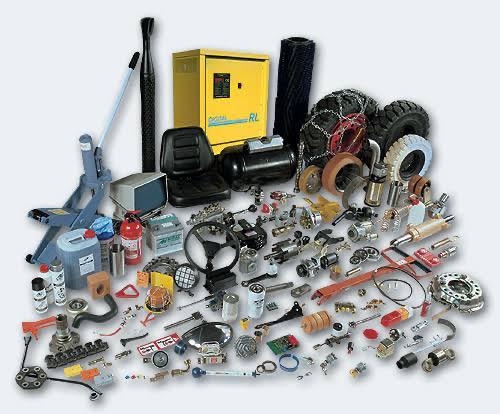
Downtime costs money. Every hour a forklift sits idle is an hour your warehouse isn’t moving, your site isn’t loading, and your margins are going the wrong direction. That’s the pressure most South African fleet operators know well — and it’s the reason more businesses are choosing aftermarket forklift parts to keep machines running without the wait and the price tag that typically come with OEM alternatives.
At GP Forklifts, we supply quality aftermarket parts for a wide range of forklift makes and models. Whether you’re keeping one machine on a Durban warehouse floor or managing a mixed fleet across Gauteng, this guide covers what you need to know before you order.
What Are Aftermarket Forklift Parts and Are They Worth Buying?
Aftermarket forklift parts are components manufactured by third-party suppliers rather than the original equipment manufacturer. They’re produced to the same functional specifications as OEM parts — designed to fit correctly and perform as expected — but they generally come at a significantly lower price point.
Worth buying? For most applications, yes. The quality gap between OEM and aftermarket has narrowed considerably in recent years, particularly for high-demand components like mast rollers, brake pads, hydraulic seals, filters, tyres, and forks. The key is sourcing from a supplier who actually knows the product and stands behind it.
Where it gets more nuanced is with safety-critical or highly specialised components. For those, you want a supplier who can confirm compatibility with your specific make and model — not just a catalogue match — and who has the technical background to advise you properly. That’s the kind of conversation we have with customers every day through our forklift parts and forklift spares service.
Who Are the Most Reliable Aftermarket Forklift Parts Suppliers in South Africa?
Not all aftermarket forklift parts suppliers in South Africa are equal. The market has grown, but the difference between a reliable supplier and an unreliable one usually becomes clear at the worst possible moment — when a machine is already down and your operation is standing still.
A few things worth looking for when evaluating a supplier:
- Stock depth across multiple brands and models — not just the popular ones
- The ability to cross-reference using your forklift’s make, model, and serial number
- Technical knowledge — people who understand forklifts, not just a parts catalogue
- Clear warranty and returns policies
- Consistent, realistic lead times
GP Forklifts supplies aftermarket parts for Toyota, Linde, Hyster, Yale, Crown, Mitsubishi, Nissan, TCM, Clark, Heli, and several other brands. Our forklift services span South Africa, with an established customer base in KwaZulu-Natal and Gauteng. For businesses running larger fleets, our wholesale forklift parts programme also offers volume pricing that meaningfully reduces your annual parts spend.
Can I Order Aftermarket Forklift Parts Online in South Africa?
Yes — and for many fleet managers, it’s become the preferred route. Calling around to multiple suppliers to check stock and pricing takes time that most operations simply don’t have.
The most important thing you can bring to an online parts enquiry is your forklift’s make, model, year of manufacture, and serial number. That information is what allows a supplier to verify compatibility before anything ships. Getting it wrong means delays and returned parts — costs that quickly outweigh any savings on the part itself.
GP Forklifts makes it straightforward to enquire and get a response from someone with actual parts knowledge. You won’t be left waiting days for a stock confirmation. Get in touch with our team and we’ll confirm availability for your specific requirement.
How Do I Use a Forklift Parts Catalogue to Find the Right Component?
A forklift parts catalogue is a brand-specific reference document that lists every serviceable component on a machine — along with part numbers, specifications, and usually exploded assembly diagrams. It’s the starting point for any accurate parts search.
One thing worth knowing: catalogues are often model- and year-specific. The same forklift model built in different production years may carry different part numbers for what looks like the same component. Ordering purely by model name, without confirming the production year or serial number, is one of the most common reasons for receiving the wrong part.
The practical approach is to use the catalogue to identify the part name and OEM part number, then bring that to your aftermarket supplier. A good supplier will cross-reference that number and confirm whether they carry a compatible alternative. Many also maintain their own cross-reference databases, which significantly speeds up the process.
If you don’t have access to the original catalogue, your forklift’s data plate — usually mounted on the mast, overhead guard, or cowl — will give you the information needed to locate the correct catalogue edition or request a parts lookup from us directly.
What Does a Forklift Parts Diagram Tell Me About My Machine?
A forklift parts diagram is an exploded view of a specific assembly — the mast, the hydraulic system, the brake assembly, the transmission, and so on. It shows how components fit together, which parts sit adjacent to which, and where a problem in one area might affect another.
From a practical standpoint, diagrams are useful for a few things:
- Identifying a part you can see on the machine but can’t name
- Understanding the scope of a repair before you authorise it
- Confirming you’re ordering the correct part, not just a visually similar one
Technicians use parts diagrams routinely during strip-down and reassembly. If you’re handling your own maintenance, getting familiar with your machine’s diagram reduces guesswork and lowers the risk of ordering something that doesn’t quite fit. If the repair is beyond what your team can manage in-house, our forklift repairs team handles everything from hydraulic failures through to full overhauls.
Most major forklift brands publish diagrams as part of their service documentation. If you’re struggling to locate the right one, contact us and we’ll point you in the right direction.
What Are the Key Forklift Parts Names I Should Know?
If you’re managing forklift maintenance without a dedicated technician, knowing the basic part names means you can communicate accurately with suppliers and service teams — and you’re far less likely to approve repairs or orders without fully understanding what you’re paying for.
Here are the components that come up most frequently:
Mast Assembly The vertical structure that carries the forks and the load. The mast assembly includes mast rollers, mast channels, lift chains, and chain anchors. Mast rollers and lift chains are among the highest-wear items on most machines.
Forks (Tines) The two arms that lift the load. Forks wear over time and should be inspected regularly for surface cracks, bending, and heel thickness reduction. Worn or damaged forks are a significant safety risk and must comply with OHSA regulations — a point worth flagging when scheduling routine maintenance.
Carriage The plate the forks attach to, which travels up and down the mast. The carriage connects to the mast via rollers and is raised and lowered by the lift cylinders.
Hydraulic System Includes the pump, lift cylinders, tilt cylinders, hoses, and seals. Hydraulic seals and hoses are among the most frequently replaced aftermarket components — they degrade with heat, pressure cycles, and age. If you’re seeing oil weeping from hose connections or slow lift response, our forklift repairs team can diagnose and resolve hydraulic issues quickly.
Brake System Most forklifts use drum or disc brakes. Brake pads, shoes, and wheel cylinders are high-wear items, particularly on machines that operate on inclines or carry maximum loads consistently.
Transmission Connects the engine or motor to the drive wheels. On IC forklifts, the transmission typically includes a torque converter, clutch packs, and drive shafts. For a deeper look at what to watch for, our guide on forklift transmission parts covers the key considerations for operators and fleet managers.
Drive Axle and Tyres Forklift tyres come in solid, pneumatic, cushion, and foam-filled variants. The right tyre depends on your operating surface and load requirements — machines on rough outdoor surfaces wear tyres significantly faster than those on smooth warehouse floors. Our dedicated forklift tyres service covers supply and fitment for all major forklift types.
Filters Engine oil, hydraulic, fuel, and air filters need regular replacement at specified service intervals. Using the correct aftermarket filter — one specified for your machine’s engine and hydraulic system — is important for maintaining system health over time.
Battery (Electric Forklifts) The traction battery and its associated components — cells, cables, connectors, and charger — are typically the largest ongoing cost item for electric forklift fleets. Timely replacement of worn cells extends overall pack life considerably.
How Do I Find Forklift Parts by Serial Number?
Finding forklift parts by serial number is the most accurate way to confirm compatibility — and it’s something more operators should be doing instead of ordering purely by model name.
Here’s why it matters: manufacturers regularly update components during a production run. Two forklifts with identical model names, built in different years, can reference entirely different part numbers for what appears to be the same component. The serial number pins down exactly which production variant you’re working with.
Where to find the serial number:
- On the data plate, typically mounted on the mast, overhead guard, or engine cowl
- In the machine’s service history documentation
- Stamped directly into the chassis frame
Once you have the serial number, your parts supplier can use it to pull the correct parts reference for your specific machine. At GP Forklifts, serial number lookup is our standard starting point for any parts enquiry — it removes ambiguity and means you receive the right part the first time. Reach out via our forklift parts page and we’ll handle the cross-referencing from there.
Where Can I Get Aftermarket Forklift Parts in Johannesburg?
Johannesburg and the wider Gauteng region is South Africa’s largest industrial hub, and the concentration of warehousing, logistics, and manufacturing operations there means forklift fleets are large and varied. Parts demand is high, but so is the variation in supplier quality.
When sourcing aftermarket forklift parts in Johannesburg, what matters most is:
- Physical stock on hand — not just a catalogue listing with a three-week lead time
- Cross-brand experience — Toyota, Hyster, Yale, Linde, Crown, and Mitsubishi are all common in Gauteng fleets
- Turnaround time — most Johannesburg operations can’t afford a week’s wait on a hydraulic seal or a brake shoe
GP Forklifts is based in Sebenza, Edenvale, and supplies customers across Gauteng. Beyond parts, we also offer forklift load testing and forklift maintenance for Gauteng operations that need a single, accountable service partner rather than juggling multiple suppliers. Get in touch with our team and we’ll confirm stock availability and lead times for your specific requirement.
Frequently Asked Questions About Aftermarket Forklift Parts
Are aftermarket forklift parts as reliable as OEM? For most standard components, quality aftermarket parts manufactured to the correct specifications perform comparably to OEM. The key variable is the supplier — always source from a reputable supplier who can confirm specifications and back the part with a warranty.
Will using aftermarket parts void my forklift warranty? Using quality aftermarket parts does not automatically void a warranty, particularly for routine wear items. Always review your warranty terms and consult your service provider if you’re uncertain about a specific component.
How long do aftermarket forklift parts last? Service life depends on the component, the operating environment, and how consistently the machine is maintained. High-quality aftermarket parts for standard wear components are generally expected to match OEM service intervals.
Can GP Forklifts source parts for older or discontinued forklift models? Yes. We regularly source parts for older machines where OEM support has been reduced or discontinued. Aftermarket suppliers often continue producing parts for models that OEMs have long phased out — which is one of the key practical advantages of the aftermarket route.
What information do I need when ordering forklift parts? Your forklift’s make, model, year of manufacture, and serial number. If you have the OEM part number, that’s a useful starting point — but not always essential. Our team can cross-reference from the serial number and confirm what’s available.
Does GP Forklifts supply parts to customers outside Gauteng? Yes. We supply customers across South Africa and into the SADC region. Lead times and availability vary by location — contact us directly for your specific requirement.