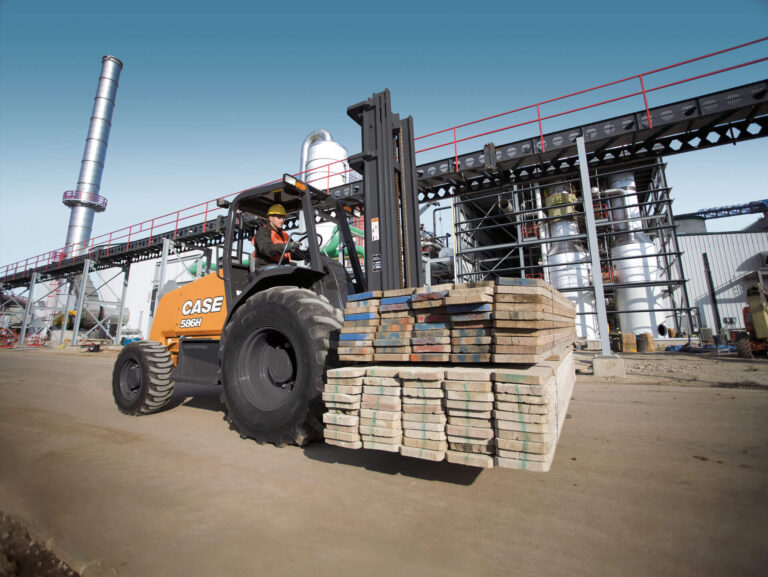
You’ve just fitted a fresh set of standard forklift tyres, and within weeks, they’re shredded. The tread’s gone, chunks are missing, and your maintenance budget is taking a beating. If you’re running forklifts on construction sites across South Africa, this scenario probably sounds familiar.
Standard forklift tyres weren’t designed for the punishment that construction environments dish out. They’re built for smooth warehouse floors and predictable conditions, not the debris-strewn chaos of active building sites. When you try to make them work in construction applications, you’re setting yourself up for premature failure and unexpected costs.
The Construction Site Reality
Construction sites are brutal on equipment. Every day, your forklifts navigate surfaces that would make warehouse managers cringe. Sharp steel offcuts lie waiting to puncture rubber. Concrete fragments tear at tyre treads. Wet conditions create slip hazards that force operators to work the tyres harder. The temperature swings from freezing Johannesburg mornings to scorching midday heat compound the stress on rubber compounds.
Your forklifts aren’t just moving loads on these sites—they’re essentially driving through an obstacle course designed to destroy tyres. The debris field changes daily as construction progresses. What was a relatively clear path yesterday might be littered with nails, wire, and building material scraps today.
Why Standard Tyres Can’t Handle the Pressure
Standard pneumatic and cushion tyres are engineered for controlled environments. The rubber compounds prioritise smooth rides and predictable wear patterns. The tread designs focus on grip across clean concrete surfaces. When you transplant these tyres onto construction sites, every design assumption breaks down.
The sidewalls on standard tyres aren’t reinforced enough to resist the constant impacts from rubble and debris. You’ll notice sidewall cuts and gouges appearing within days of deployment. These damage points create weak spots where the entire tyre structure starts to fail.
Tread depth on standard tyres depletes rapidly when your forklift operators navigate rough, uneven surfaces. The aggressive terrain accelerates wear by three to five times compared to warehouse use. What should last 18 months might barely make it through four months on a construction site.
Punctures become a daily concern rather than a rare occurrence. Every nail, screw, and metal shard on site represents a potential flat tyre and work stoppage. Standard tyre construction simply doesn’t provide adequate puncture resistance for construction applications.
The Hidden Costs of Using Wrong Tyres
You might think you’re saving money by fitting standard tyres to your construction site forklifts. The initial purchase price looks attractive compared to construction-grade alternatives. But this apparent saving evaporates when you factor in the real costs.
Frequent replacements multiply your expenses. When tyres fail every few months instead of lasting a year or more, your actual cost per operating hour skyrockets. You’re not just buying more tyres—you’re paying for repeated fitting, balancing, and disposal services.
Downtime hits your budget harder than tyre costs. Every time a forklift is out of service for tyre replacement, your site productivity suffers. Projects fall behind schedule. Labour stands idle waiting for equipment. Contractors face penalties for delayed completion.
Safety risks increase when tyres aren’t suited to the environment. Worn treads compromise stability, particularly when lifting loads on slopes or uneven ground. Punctured tyres can cause sudden equipment failure, potentially endangering operators and nearby workers.
What Makes Construction-Grade Tyres Different
Construction-specific forklift tyres address these challenges through fundamental design changes. The rubber compounds are harder and more resistant to cuts and punctures. You’ll notice the difference immediately—these tyres feel solid and substantial compared to standard options.
Reinforced sidewalls can withstand impacts that would cripple ordinary tyres. Multiple layers of protective material shield the internal structure from debris. When your forklift rolls over sharp objects, these reinforcements prevent penetration rather than just delaying it.
Deeper tread patterns maintain grip even as wear occurs. The aggressive designs channel debris away from the contact patch instead of trapping it against the tyre. You get consistent performance throughout the tyre’s extended lifespan.
Specialized compounds resist the temperature extremes found on South African construction sites. The rubber maintains flexibility in cold conditions without becoming brittle, whilst remaining stable under intense heat. This temperature tolerance prevents premature aging and cracking.
Matching Tyres to Your Construction Application
Not all construction sites demand the same tyre specifications. A high-rise development in Sandton has different requirements than a mining operation in Rustenburg. You need to evaluate your specific conditions before selecting tyres.
Consider the primary surface your forklifts work on. Concrete pours and formed surfaces cause different wear patterns than raw earth or gravel. Sites with extensive steel work create more puncture risks than timber frame construction projects.
Load weights and frequency matter significantly. Forklifts moving heavy concrete blocks continuously face different stresses than machines making occasional material deliveries. Higher loads require tyres with greater load ratings and structural integrity.
Operating hours per day influence your choice. Equipment running single shifts can potentially extend tyre life compared to forklifts operating around the clock. However, construction environments are harsh enough that even light usage demands construction-grade tyres.
When Standard Tyres Make Sense (And When They Don’t)
There are limited scenarios where standard forklift tyres might survive on construction-adjacent work. If your forklift operates primarily in a secured storage yard with paved surfaces, servicing a construction project without actually entering the active site, standard tyres could be adequate.
Indoor fit-out work in completed buildings sometimes allows for standard tyres, provided the floors are clean and finished. Moving furniture, fixtures, and equipment in controlled environments doesn’t expose tyres to the same destructive forces.
However, the moment your forklifts cross onto active construction areas, standard tyres become a liability. The transition from protected environments to construction zones requires a corresponding upgrade in tyre specifications. You can’t compromise on this without accepting accelerated failure rates.
The GP Forklifts Approach to Construction Tyre Solutions
At GP Forklifts, we’ve watched countless businesses learn this lesson the expensive way. They start with standard tyres, experience rapid failures, then upgrade to construction-grade options after wasting money on premature replacements. We help you skip that costly learning curve.
Our team assesses your specific construction environment before recommending tyres. We look at your typical loads, operating surfaces, debris types, and usage patterns. This evaluation ensures you get tyres that will actually survive your conditions, not just generic construction tyres that might still underperform.
We stock tyres designed for South African construction conditions. The temperature ranges, debris types, and surface conditions at local sites require specific compound formulations. Import tyres designed for European or American conditions often fail prematurely in our climate.
Your operators receive guidance on tyre care and inspection protocols. Even construction-grade tyres need proper maintenance to deliver their full lifespan. Simple daily checks can identify developing issues before they cause failures.
Making the Switch to Construction-Grade Tyres
Transitioning from standard to construction-grade tyres doesn’t mean replacing every tyre simultaneously. You can phase in upgrades as standard tyres fail, prioritising your most heavily used machines first. This spreads the initial investment whilst immediately improving reliability on key equipment.
Track your tyre performance metrics during the transition. Note the extended replacement intervals. Calculate the reduction in downtime. Document the decrease in emergency callouts for flat tyres. These measurements prove the value of construction-grade specifications.
Train your operators to recognise the difference in tyre performance. Construction-grade tyres handle differently—they’re firmer and provide different feedback. Operators need to adjust their expectations and driving techniques accordingly.
Maintain detailed records of tyre life and performance. This data helps you refine your specifications over time. You might discover that certain machines need even more aggressive tyre grades, whilst others could potentially use less expensive options without compromising performance.
Looking Beyond Tyres to Total Equipment Performance
Tyre selection is just one element of keeping construction site forklifts operational. Proper equipment maintenance, operator training, and site management all contribute to minimising premature failures. However, tyres are often the first component to fail on construction sites, making them a critical focus area.
When your forklifts are fitted with appropriate construction-grade tyres, you create a foundation for reliable performance. Other components last longer when tyres properly cushion impacts and maintain stability. Transmissions, steering systems, and hydraulics all benefit from the improved performance.
Consider partnering with tyre suppliers who understand construction applications. At GP Forklifts, we don’t just sell tyres—we provide ongoing support to keep your equipment running. Emergency callout services, preventive maintenance programmes, and technical advice all form part of keeping construction site forklifts operational.
Your site managers need to understand how operational decisions affect tyre life. Pushing forklifts beyond their rated capacities accelerates tyre wear. Operating on excessively rough surfaces without proper tyre specifications guarantees premature failure. Creating awareness at all levels improves outcomes.
The Real Cost of Downtime on Construction Projects
Every hour your forklift sits idle waiting for tyre replacement costs far more than the tyre itself. Construction schedules are tight, with multiple trades depending on material movement to maintain progress. When the forklift stops, everything downstream slows or halts.
Labour costs continue whether equipment is running or not. Your operators, riggers, and tradespeople still need payment even when they’re standing around waiting for equipment repairs. These labour hours represent pure waste—no productive output, just accumulated costs.
Project penalties for missed deadlines can dwarf equipment maintenance expenses. Main contractors face substantial financial penalties when projects overrun. These penalties often get passed down to subcontractors, including those responsible for material handling delays.
Reputation damage from unreliable equipment affects future tender opportunities. Word spreads quickly in construction circles about contractors whose equipment constantly fails. Developers and main contractors remember these issues when awarding future projects.
Why Construction Companies Choose GP Forklifts
You need a tyre supplier who responds when equipment fails on site. Construction doesn’t stop for scheduled business hours. Projects run evenings, weekends, and public holidays. We provide emergency support when your operations demand it, not just when it’s convenient for us.
Our technicians understand construction site conditions firsthand. They’ve worked in these environments and know the specific challenges you face. This experience translates to better recommendations and faster problem-solving when issues arise.
Pricing transparency matters when budgets are tight. You receive clear quotes without hidden fees or surprise charges. Construction projects demand accurate cost forecasting, and unreliable pricing from suppliers undermines your financial planning.
Quality assurance on every tyre we supply protects your investment. We inspect tyres before fitting to ensure they meet specifications. Manufacturing defects get caught before they cause site failures, not after you’ve paid for installation and experienced downtime.
Training Your Team on Construction Tyre Management
Your operators are your first line of defence against tyre failures. They notice developing problems before office staff become aware. Teaching them what to look for during pre-start inspections catches issues early.
Daily visual checks should include tread depth assessment, sidewall damage inspection, and inflation pressure verification. Operators need to understand that construction tyres still require attention, even though they’re more robust than standard options.
Report systems need to make it easy for operators to flag concerns. If reporting tyre issues involves excessive paperwork or criticism, operators will delay reporting until failures occur. Create a culture where proactive reporting is valued and acted upon.
Consider implementing skills development programmes for your equipment operators. Better-trained operators make fewer mistakes that damage tyres and equipment. They understand how operating technique affects maintenance costs and equipment longevity.
The Environmental Factor in Tyre Selection
Premature tyre disposal creates environmental waste that construction companies increasingly need to address. Every failed tyre ends up in landfills or recycling facilities. Reducing replacement frequency through proper tyre selection directly reduces environmental impact.
Construction-grade tyres that last three times longer than standard options produce one-third the waste per operating hour. This reduction matters for companies tracking their environmental footprint and working towards sustainability targets.
Proper tyre selection also reduces the number of service vehicles travelling to your site for replacements. Fewer emergency callouts mean reduced fuel consumption and emissions from service vehicles making multiple trips.
Some construction projects now require contractors to demonstrate environmental responsibility in equipment management. Using appropriate tyres that minimise waste and service requirements helps meet these project specifications.
Planning for Long-Term Tyre Performance
Budget forecasting becomes more accurate when you use appropriate construction-grade tyres. Instead of unpredictable replacement cycles that depend on random debris encounters, you establish reliable service intervals based on actual wear patterns.
Inventory management improves when tyre life becomes predictable. You can maintain appropriate spare tyre stocks without excessive capital tied up in emergency inventory. Planned replacements cost less than rushed emergency purchases.
Relationship building with your tyre supplier creates long-term value. At GP Forklifts, we track your fleet’s performance over time. This data helps us recommend improvements and identify opportunities to reduce your total operating costs.
Regular performance reviews ensure your tyre specifications remain appropriate as site conditions evolve. What worked during excavation phases might need adjustment during structural work or finishing stages. Adapting tyre choices to changing conditions optimises performance and costs.
FAQ Section
How long do standard forklift tyres last on construction sites? Standard forklift tyres typically last only 3-6 months on construction sites, compared to 12-18 months in warehouse environments. The rough terrain, debris, and harsh conditions accelerate wear by 300-500%, making construction-grade tyres a more economical choice despite higher initial costs.
What’s the main difference between standard and construction-grade forklift tyres? Construction-grade tyres feature reinforced sidewalls, harder rubber compounds, deeper tread patterns, and puncture-resistant construction. These design elements specifically address the sharp debris, rough surfaces, and impact damage common on construction sites, providing 3-5 times longer service life than standard tyres.
Can I mix standard and construction-grade tyres on the same forklift? You should never mix tyre grades on the same forklift. Different tyre constructions have varying load capacities, flexibility, and handling characteristics. Mixing creates stability issues and uneven wear patterns. Always fit matching tyres across all positions on your forklift to maintain safe, predictable performance.
When should I replace construction forklift tyres? Replace construction forklift tyres when tread depth reaches 25% of the original depth, when sidewall damage compromises structural integrity, or when punctures occur in load-bearing areas. Regular inspections help identify these conditions before they cause equipment failure or safety hazards on your construction site.
Are construction-grade forklift tyres worth the higher cost? Construction-grade tyres cost 40-60% more initially but last 3-5 times longer than standard tyres in construction environments. When you factor in reduced downtime, fewer replacements, and lower labour costs for tyre changes, construction-grade tyres typically reduce your total operating costs by 30-50% on active building sites.