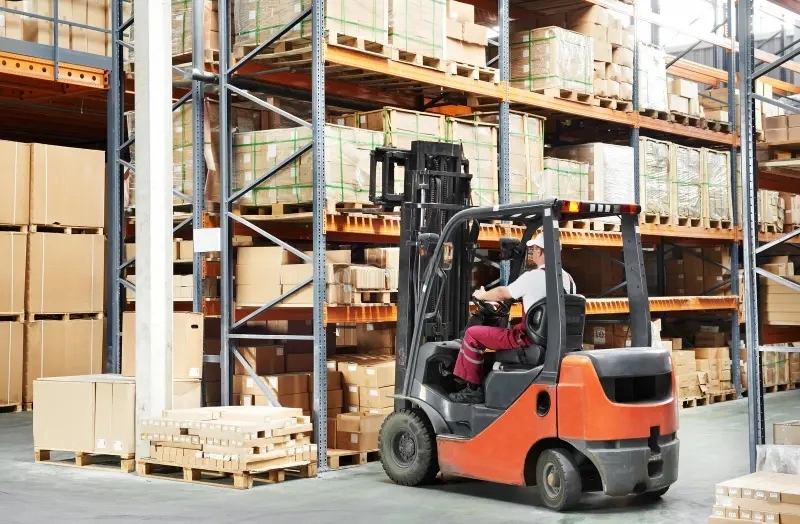
Most forklift operators can tell you their machine’s lift capacity off the top of their head. Ask them when they last checked their tyre wear, though, and you’ll usually get a shrug.
It’s not laziness — tyres just don’t announce themselves the way a hydraulic fault or a dead battery does. They degrade quietly, shift after shift, until one day the machine isn’t tracking straight, the floor’s getting chewed up, or your operator’s complaining about the vibration. By that point, you’ve probably already been losing productivity without realising it.
If you run Clark forklifts — a C-Series, one of the EPX electrics, a GTS sit-down rider, whatever the case — this guide is about what your tyres are actually doing, when they need replacing, and what goes wrong when you get the specification wrong. At GP Forklifts, we field these questions from South African operators regularly. Here’s what matters.
Clark Forklift Tyres Are Model-Specific for a Reason
It’s tempting to grab whatever tyre is in stock when yours wears out. The sizes look similar, the price is right, and it’ll do the job. Except often it won’t — not properly.
Clark machines are built with specific load tolerances, turning geometry, and stability margins. The tyres are part of that calculation. Put an undersized tyre on a C500 or swap the wrong profile onto a sit-down rider, and you’ve changed how that machine behaves under a load it was rated to carry. That’s a stability issue, not just a performance one.
Clark publishes tyre specs per model, and they differ meaningfully between the ranges. If you’re unsure what your machine needs, GP Forklifts can cross-reference your model and serial number and confirm the correct fitment before anything gets ordered.
The Three Tyre Types You’ll Encounter on Clark Forklifts
Most Clark operators in South Africa will deal with one of three tyre types across their fleet’s lifetime. Getting this choice right from the start saves a lot of grief later.
Cushion Tyres
Solid rubber, no air, pressed directly onto the steel rim. Cushion tyres are the indoor standard — smooth warehouse floors, cold stores, distribution centres, factory bays. They sit low to the ground, which keeps the machine’s profile compact and suits environments with tight racking clearances or dock levellers.
Where they fall short is outdoors. Rough yard surfaces, gravel, uneven concrete expansion joints — cushion tyres take a beating on all of it and wear unevenly. If your Clark is crossing between inside and outside regularly, cushion tyres are probably the wrong choice for that application.
Pneumatic Tyres
Deeper tread, larger footprint, and built for anything that isn’t a smooth sealed floor. Air-filled pneumatics perform well on rough outdoor surfaces and absorb surface irregularities far better than cushions. For loading bays, construction environments, and mixed-surface yards, this is what you want.
Foam-filled pneumatics are worth looking at seriously if your site has recurring puncture problems — scrap metal, steel banding, sharp aggregate. The ride is slightly firmer than air-filled, and the machine is a bit heavier to move around, but you eliminate callouts for flat tyres entirely. For a lot of South African industrial sites, that trade-off makes sense.
Non-Marking Tyres
Same construction as cushion or pneumatic, minus the carbon black compound that gives standard rubber its colour. No black tyre marks on finished floors. These are mandatory in food processing plants, pharmaceutical environments, and anywhere with strict floor hygiene standards.
They cost more and don’t last as well on abrasive surfaces. Use them only where the application actually requires it — fitting non-marking tyres on a rough warehouse floor just because they look cleaner is an unnecessary expense.
Knowing When Your Tyres Have Had Enough
Cushion tyres on Clark forklifts have a wear indicator built into the rubber — a raised band around the circumference, typically at the 50mm mark on the sidewall. When the tyre surface wears down to that line, you’re done. Keep running it and the metal rim starts making contact with the floor, which damages the concrete and creates a genuine safety hazard for whoever’s operating the machine.
Pneumatic tyre assessment is more about tread depth and sidewall condition. If the tread pattern is nearly gone, water and debris have nowhere to go and grip drops off. On a loaded forklift doing 15 km/h across a wet yard, that’s not theoretical.
There are also a few things that warrant attention before you even get to the wear limit:
- Chunking — rubber breaking away in chunks, usually from sharp debris on the floor surface
- Flat spots — the machine stood stationary too long, especially overnight in cold conditions
- Sidewall cracking — rubber degrading from chemical exposure or prolonged sun on outdoor machines
- Uneven wear between tyres — often an alignment issue, sometimes an operator habit, worth investigating either way
Any of these showing up? Worth a call to GP Forklifts to determine whether it needs immediate attention or can wait for the next scheduled service.
What Worn Tyres Actually Cost You
Operators often defer tyre replacement because the upfront cost is visible. What’s less visible is what running worn or incorrect tyres costs over time.
A tyre past its wear life creates rolling resistance. The motor or engine compensates. On an electric Clark, that eats into your battery range per shift — you’re charging more often or finishing shifts with a flat battery before the work is done. On LP gas or diesel machines, fuel consumption creeps up. It’s not dramatic, but it’s consistent.
Then there’s the mechanical wear that vibration causes downstream — mast components, steering geometry, chassis fatigue. These are slower to show up but significantly more expensive to fix when they do. And in the worst-case scenario, a tyre that fails under a loaded mast mid-operation creates a tipping risk. Forklift tip-overs cause serious injuries. The racking damage alone from a dropped load in a busy distribution centre can run to tens of thousands of rands.
For businesses running Clark forklifts on multi-shift cycles — cold chain logistics, retail distribution, manufacturing — tyre condition is a real cost centre. Managing it proactively is cheaper than managing it reactively, consistently.
How Tyre Fitting Actually Works
Cushion tyre replacement needs a hydraulic press. The old tyre is pressed off, the new one pressed on under substantial force to seat properly against the rim. You can’t do this on-site with improvised equipment without risking a damaged rim or a tyre that isn’t seated correctly. An improperly seated cushion tyre will fail — it’s just a matter of when.
Pneumatic replacement is more straightforward in concept, but Clark forklifts in the 3–5 tonne range have heavy wheels and need proper machine support while they’re off. Wheel nut torque matters here — undertightened wheel nuts are a safety issue, and over-torquing strips threads or damages studs. Neither is acceptable on a working forklift.
At GP Forklifts, tyre replacements are built into scheduled service visits wherever possible. The machine is already supported and off the floor, which means the rest of the running gear gets checked at the same time. It avoids a separate callout cost and keeps the downtime in one block rather than spread across multiple visits.
Finding the Right Clark Forklift Tyres in South Africa
This is where South African operators sometimes run into trouble. Clark has strong market penetration locally — particularly in warehousing and manufacturing — but their tyre specifications aren’t always stocked by general suppliers who focus on automotive or truck fitments. You can spend half a day making calls and still not find the right size.
Before sourcing anything, you need three pieces of information: the tyre size marked on your current tyre, the rim diameter, and whether your original fitment is cushion or pneumatic. Miss any one of those and you’re either ordering something that won’t fit or ordering something that won’t perform the way it should.
GP Forklifts sources and stocks tyres for the Clark range — OEM-specification options as well as quality aftermarket alternatives where those represent better value for the application. If you know your Clark model and serial number, reach out to the team and they’ll confirm exactly what you need. It saves a lot of back-and-forth.
Building Tyre Checks Into Your Routine
The operators who have the fewest tyre-related headaches aren’t doing anything complicated. They’ve just made tyre condition a standard part of their service schedule rather than something that gets addressed when a problem becomes obvious.
Most Clark service intervals — 250, 500, and 1,000 hour marks — include a tyre inspection. If your service provider isn’t logging wear depth at each visit, ask them to start. It’s a five-minute addition to the inspection that gives you a real picture of where your tyres are heading.
At the operator level, the pre-shift walk-around is genuinely useful if it’s done properly. A quick visual of each tyre before the first lift of the day — looking for anything embedded, any new damage, any profile change — takes under a minute. A cut in the sidewall caught before a shift starts is an easy fix. The same cut found after three hours of loading is a different conversation entirely.
Clark forklift tires aren’t complicated once you understand the differences between types, know your wear indicators, and have someone to call when you need a replacement matched to your machine. GP Forklifts handles Clark servicing and tyre supply across South Africa — if you need a second opinion on your fleet’s tyre condition, or just want to confirm the correct fitment for a specific model, that’s what we’re here for.
Frequently Asked Questions
Q: Does it have to be an OEM Clark tyre, or can I use an aftermarket option?
OEM isn’t a requirement, but the specification is. An aftermarket tyre that matches the correct size and load rating for your Clark model will perform the same as an OEM option — often at a better price. What you can’t do is substitute a different specification because it’s what’s available. GP Forklifts can confirm which aftermarket options are compatible with your specific machine.
Q: How often do Clark forklift tyres need to be replaced?
There’s no calendar interval — it depends entirely on your application. A Clark running a single shift on smooth concrete will get years out of a set of cushion tyres. The same machine running multiple shifts on rough outdoor surfaces might need tyres every six to twelve months. Use the wear indicator on cushion tyres as your primary guide. For pneumatics, tread depth and sidewall condition tell you where you are.
Q: Why are my front tyres wearing so much faster than the rear?
On a counterbalance forklift, the front tyres carry the majority of the load weight — that’s just how the physics works. If front tyre wear is accelerating beyond what’s expected, the most common culprits are frequent operation near the machine’s rated capacity, abrasive floor surfaces, or operator habits like sharp turning under a loaded mast. An alignment check and a look at your typical load cycles will usually point to the cause.
Q: Can I switch my Clark from cushion tyres to pneumatics?
Generally, no. Clark machines are designed around a specific tyre type, and the rim, axle, and chassis geometry are matched accordingly. Swapping from cushion to pneumatic changes the ride height, shifts the load centre, and puts the machine outside its rated stability specifications. If your operating environment has changed enough that your current tyre type isn’t working, the better question is whether you have the right Clark model for the job.
Q: What’s the actual difference between foam-filled and solid pneumatic tyres?
They both eliminate the puncture risk, but the construction is different. Foam-filled tyres are standard air-filled tyres that have been injected with polyurethane foam and sealed. Solid pneumatics are moulded from solid rubber in a pneumatic profile. Because foam-filled tyres keep the original air-tyre carcass, they ride more like an air tyre — slightly more give, better on uneven surfaces. Solid pneumatics are firmer. Either works well where punctures are a real site hazard, but foam-filled is usually the better choice on surfaces that aren’t completely flat.
Content produced for GP Forklifts | gpforklifts.co.za | Clark forklift tires — South Africa