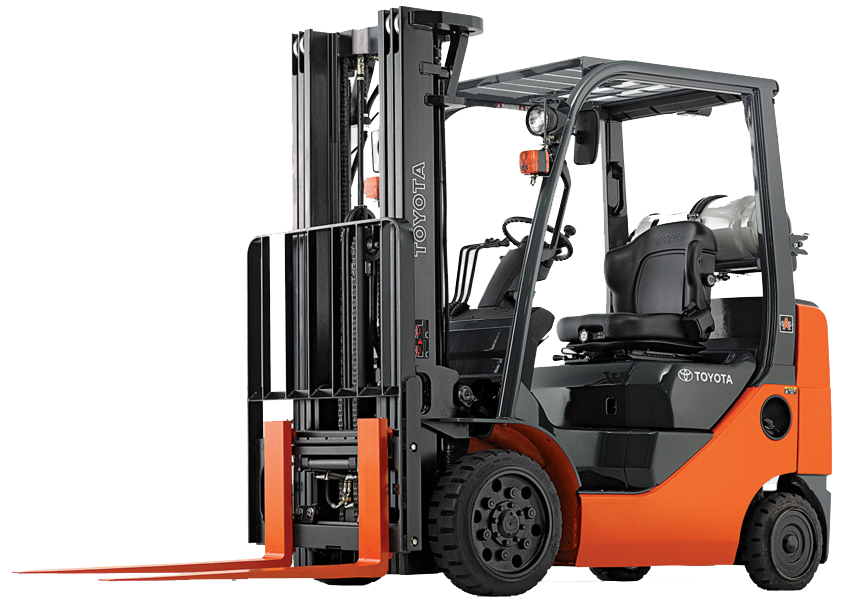
Your Toyota forklift is only as dependable as the tyres it runs on. That statement sounds straightforward, yet tyre condition is one of the most consistently overlooked aspects of forklift maintenance across South African warehouses, manufacturing plants, and distribution centres. When tyres wear unevenly, lose pressure, or operate outside their load rating, the consequences reach well beyond rubber and rims — you are looking at compromised stability, increased fuel or battery consumption, accelerated damage to mast components, and a forklift that no longer meets its original safety specification.
This post covers what you, as someone who already understands the basics of forklift operation, need to know to make sound decisions about Toyota forklift tyres: the types available, how to read wear correctly, load and speed factors, surface compatibility, and when replacement becomes non-negotiable. The team at GP Forklifts works with these machines daily, and the guidance below reflects real-world experience on South African sites.
The Three Tyre Types and Where Each One Belongs
Toyota forklifts are designed to work across a range of environments, and the tyre type fitted to a machine must match the surface and application. Fitting the wrong type does not merely accelerate wear — it introduces instability that can cause load loss or tip-over events.
Solid (Cushion) Tyres
Solid cushion tyres are the standard fitment on most indoor Toyota counterbalance forklifts. They are pressed onto a metal band and offer zero risk of puncture, which makes them the practical choice for warehouses, cold stores, and factory floors where sharp debris, glass fragments, or metal offcuts are present. On smooth, level concrete, they deliver consistent traction and a predictable ride. Their limitation is that they transmit more vibration to the operator and the load than a pneumatic tyre would, so they are not suited to rough or uneven outdoor surfaces.
Pneumatic Tyres
Air-filled pneumatic tyres absorb surface irregularities far better than solid alternatives, which is why they are specified for outdoor yard work, gravel surfaces, and sites where the floor is uneven or sloped. They carry higher load ratings across rough terrain and provide noticeably better operator comfort. The trade-off is the puncture risk and the ongoing need for pressure checks. Running a pneumatic tyre under-inflated is particularly damaging on a Toyota forklift because the reduced footprint changes the weight distribution calculation the machine was designed around, placing undue stress on axles, bearings, and the counterweight assembly.
Foam-Filled Tyres
Foam-filled tyres occupy the middle ground. They look and behave like pneumatics, absorbing surface vibration adequately, but the cavity is filled with polyurethane foam rather than air. This eliminates puncture risk without the rigid ride of a solid tyre. They are a sensible option on sites with mixed surfaces — partly sealed, partly rough — where pneumatic punctures are a recurring operational problem. On a Toyota reach truck or counterbalance working between an internal dock and an external yard, foam-filled tyres often provide the most reliable long-term solution.
Reading Tyre Wear on a Toyota Forklift
Wear indicators on Toyota forklift tyres are not a suggestion — they are the manufacturer’s defined limit for safe operation. On most solid tyres, that line sits at approximately 38 mm from the ground to the top of the tyre when the machine is loaded. Once wear brings the tyre down to or beyond that line, the tyre is legally and practically condemned.
Beyond the wear line, there are several wear patterns that tell you something specific about the machine or how it is being operated:
- Centre wear indicates over-inflation on a pneumatic tyre. The tyre is running on its crown rather than across the full contact patch, which reduces grip and increases ground pressure on a narrow strip.
- Edge wear points to under-inflation. The sidewalls bow outward, causing the edges to carry the load. This also degrades the sidewall itself, making blowouts more likely.
- One-sided wear often indicates an alignment issue, a bent axle, or a mast that is not operating square. Replacing the tyre without investigating the root cause means the replacement will wear identically to the one you just changed.
- Flat spots result from hard braking or wheel lockup. On Toyota forklifts with electric drive, regenerative braking rarely causes flat spots, but on LPG or diesel machines operating on steep ramps, they are common.
If you are seeing unusual wear patterns on your Toyota forklift tyres, the tyre is communicating a mechanical issue. Replacing rubber without investigating the cause is an avoidable expense. The technical team at GP Forklifts can assess wear patterns on-site and advise on whether the cause is tyre-related or mechanical.
Load Ratings, Speed, and Why the Spec Sheet Matters
Toyota publishes load capacity data for each forklift model based on a specific tyre size and type. When you replace tyres, the replacement must match the original specification — or exceed it — precisely because the load rating forms part of the machine’s approved safety margin. Fitting a tyre with a lower load rating than the original does not just void your maintenance contract; it materially reduces the forklift’s safe operating capacity, which means the data plate on the mast is no longer accurate.
Speed rating is equally relevant. Toyota forklifts are not high-speed machines, but there is a meaningful difference between a tyre rated for 25 km/h site travel and one rated for 16 km/h yard use. On distribution centre sites in Gauteng and KwaZulu-Natal where machines cover significant distances between racking aisles and dispatch bays, speed ratings influence tyre longevity and operating temperature. A tyre running consistently above its rated speed generates excess heat, which causes internal breakdown long before any surface wear becomes visible.
When you source Toyota forklift tyres through GP Forklifts, the specification is matched to your exact machine model and chassis number. That step removes the guesswork and ensures the replacement tyre is within the original design envelope.
Surface Compatibility: Matching the Tyre to the Floor
South African industrial sites vary considerably. A cold storage facility in Cape Town runs on sealed epoxy or concrete. A scrap metal yard in Vereeniging operates on crushed rock and compacted sand. A printing company in Durban may have smooth sealed floors with painted markings that cannot be damaged by tyre compounds that leave residue. Surface compatibility is not a minor consideration — it affects tyre compound selection, tread pattern, and the type of construction appropriate for the application.
Non-marking tyres deserve specific mention here. Standard black rubber compounds contain carbon black, which will leave visible marks on light-coloured or polished floors. If your Toyota forklift operates in a food processing plant, a pharmaceutical facility, or a showroom environment, non-marking white or grey compound tyres are required. They carry the same load ratings as standard black tyres but are formulated to leave no residue. Not all tyre suppliers stock non-marking variants across the full Toyota tyre size range — it is worth confirming availability before committing to a supplier.
When Replacement Becomes Necessary
The wear indicator is the minimum threshold, not the optimal replacement point. Waiting until a tyre hits the wear line means you are operating a degraded tyre for an extended period before replacement, which accumulates costs in fuel consumption, component wear, and operator fatigue. A more practical approach is to schedule inspection at a defined interval — typically every 500 to 800 operating hours on heavily-used machines — and assess tyre condition alongside fluid levels, brake function, and mast wear.
Sidewall cracking is a replacement trigger that wear indicators do not capture. Rubber compounds degrade with UV exposure and temperature cycling, and a tyre with deep sidewall cracks can fail structurally even when the tread surface appears adequate. This is particularly relevant on machines that sit idle outdoors between shifts, which is common on construction and agricultural sites across South Africa.
Chunking — where sections of tread break away rather than wearing gradually — indicates either a compound mismatch with the surface, tyre overloading, or a machine alignment issue. It accelerates rapidly once it starts, and a chunked tyre should be removed from service immediately. The debris it leaves on the floor also creates a slip hazard for pedestrians and other machinery.
There is also a practical argument for replacing tyres in axle pairs rather than individually. When one tyre on an axle is significantly more worn than the other, the difference in diameter creates a cornering imbalance that puts lateral stress on the drive axle and transmission components. The cost of replacing two tyres at once is far lower than the repair costs that follow from driving an asymmetric pair for an extended period.
Why Operators Choose GP Forklifts for Toyota Tyre Replacement
The South African market has no shortage of tyre suppliers, but Toyota forklift tyres sit within a specific technical category that requires more than a catalogue match on dimensions. The correct compound, construction, load rating, and surface compatibility all need to align with the machine’s operating specification and the site conditions where it works.
GP Forklifts holds stock across the principal Toyota forklift tyre sizes and compounds, including non-marking variants and foam-filled options. Fitment is done by technicians who work on Toyota machines regularly, which means the tyre is pressed and seated correctly — an aspect that is often underestimated. An incorrectly pressed solid tyre will migrate on the rim under load, creating a vibration that operators often misdiagnose as a mechanical fault. Beyond the tyre itself, the team can identify whether unusual wear patterns indicate a mechanical issue that needs attention before the replacement rubber goes on.
Operating across Gauteng and servicing clients nationally, the team understands the specific demands of South African sites — the summer temperature extremes, the surface conditions on older industrial premises, and the operational intensity that comes with high-throughput distribution environments. If you are due for a tyre inspection or replacement, you can reach the team directly through gpforklifts.co.za.
FAQ — Toyota Forklift Tyres
1. How do I know when my Toyota forklift tyre needs replacing?
Check the wear indicator moulded into the tyre sidewall. On most Toyota forklift solid tyres, the safe threshold is approximately 38 mm from the ground surface to the top of the tyre under load. Below that line, the tyre is condemned. Additionally, watch for sidewall cracking, chunking, flat spots, or any visible separation between tyre and rim. Unusual vibration during operation is also a reliable indicator that the tyre should be inspected.
2. Can I fit any brand of tyre to my Toyota forklift?
You can fit aftermarket tyres, provided the replacement matches the original specification exactly: tyre size, load rating, speed rating, and compound type. Fitting a tyre with a lower load rating than the original invalidates the machine’s data plate capacity and creates a safety risk. Always confirm the fitment spec with a technician familiar with Toyota models before purchasing.
3. What is the difference between solid and pneumatic tyres on a Toyota forklift?
Solid tyres offer puncture immunity and suit smooth indoor surfaces like warehouse concrete. Pneumatic tyres absorb surface irregularities and suit outdoor or rough terrain applications. Pneumatics require regular pressure checks and carry a puncture risk, but they provide better operator comfort and load stability on uneven ground. Foam-filled tyres combine the ride quality of a pneumatic with the puncture resistance of a solid, making them suitable for mixed-surface environments.
4. How long do Toyota forklift tyres typically last?
Lifespan depends on operating intensity, surface conditions, load weights, and maintenance practices. In a standard single-shift warehouse operation on smooth concrete, a quality solid tyre will typically reach 2,000 to 3,000 operating hours before hitting the wear indicator. On rougher surfaces, in multi-shift operations, or where overloading occurs regularly, that figure can drop considerably. Scheduling tyre inspections every 500 operating hours is a reasonable practice for high-use machines.
5. Do I need non-marking tyres for a food facility or pharmaceutical warehouse?
Yes, in most cases. Standard black rubber compounds leave marks on light-coloured or polished floors, which is unacceptable in food processing, pharmaceutical, and retail environments. Non-marking tyres use a different compound that leaves no visible residue. They carry the same load ratings as standard tyres and are available across the principal Toyota forklift tyre sizes. Confirm availability with your supplier before assuming the size you need is in stock.