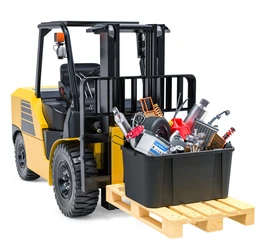
When you’re running a forklift every day, knowing what keeps the machine going matters more than you’d think. Each part has a job to do, and when something breaks down, you’re looking at lost time and money. Whether you’re managing a warehouse in Joburg or running production in Durban, getting familiar with your forklift’s bits and pieces helps you stay on top of maintenance and avoid the kind of downtime that makes your day go sideways.
The Main Bits That Make Up Your Forklift
Your forklift’s got several systems that need to work together. There’s the power train—that’s your engine or motor, transmission, and the drivetrain that gets everything moving. Then you’ve got the hydraulic system doing the heavy lifting through cylinders, pumps, and valves. Up front, the mast assembly (that tall bit) holds the carriage and forks that actually shift your loads around.
The chassis is basically the skeleton holding everything together. Round the back, you’ll spot the counterweight keeping things balanced when you’re lifting heavy stuff up front. And the operator compartment? That’s where you sit, with all your controls, steering wheel, and safety bits within reach.
What Makes Your Forklift Move
The engine or electric motor is where it all starts. Diesel engines are the go-to for outdoor work and heavy jobs, whilst electric motors make more sense indoors where you can’t have fumes everywhere. Your transmission takes that engine power and turns it into something useful—forward, reverse, and everything in between.
Drive axles get the power to your wheels. Electric forklifts have a drive motor hooked straight to the axle. The diesel and LPG models run a more traditional setup with prop shafts and diffs. These parts take a proper beating, especially when you’re constantly starting, stopping, and changing direction.
You want to keep an eye on your power train. Check your transmission fluid, look at the drive belts, listen for weird noises. At GP Forklifts, we keep genuine parts in stock for the major brands, so you’re getting stuff that actually fits your machine properly.
How the Hydraulics Do the Lifting
Your hydraulic system turns mechanical energy into the kind of fluid pressure that lifts several tonnes like it’s nothing. The pump pulls oil from the reservoir and pressurises it. That oil then flows through control valves to the lift cylinders, which push out or pull back to move the mast up and down.
Hoses and fittings link it all together. They’ve got to handle serious pressure without springing leaks—even a small leak drops your lifting power and creates safety problems. The reservoir stores your hydraulic fluid and usually has filters to catch rubbish that would otherwise wreck your precision components.
Keep your hydraulic oil topped up and clean. Dirty oil wears out pumps and cylinders fast, and then you’re looking at expensive fixes. Change the oil based on how many hours you’re running, and check those hoses monthly for cracks, bulges, or wet spots. Slow lifting or jerky movements? That’s your hydraulics telling you something’s wrong.
The Mast and Carriage Setup
The mast decides how high you can go. Single-stage masts are basic, whilst two-stage and three-stage jobs reach higher without making the closed height taller. That matters when your facility’s got low ceilings but you still need decent lift height.
Rails guide the carriage as it goes up and down. Rollers or bearings on the carriage run along these rails for smooth travel. Chains connect the carriage to the lift cylinders—when the cylinders extend, the chains pull everything upward. These chains need proper tension and regular grease or they’ll wear out before their time.
Side shifters let you slide the carriage left or right without moving the whole forklift. Fork positioners adjust your fork spacing on the fly, which saves time when you’re handling different-sized loads. Handy attachments, but they’re more bits that need looking after.
Check your mast regularly. Bent rails, worn rollers, stretched chains—these things show up if you’re paying attention. Listen whilst you’re lifting. Grinding or squeaking means something needs sorting. GP Forklifts can refurbish masts when the wear gets too serious for safe operation.
Your Forks—Simple But Critical
Forks look straightforward, but there’s proper engineering behind them. Standard ones run 1,070mm long and 100mm wide, though you can get different sizes for specific jobs. Thickness goes from 40mm to 60mm depending on what you’re lifting.
The fork heel—that vertical bit connecting to the carriage—takes all the stress from loaded lifts. Cracks there are bad news. The blade’s the horizontal part holding your loads, and it can bend if you overload it or hit something hard. Even small bends mess with load stability and up your accident risk.
Measure fork thickness on a regular schedule. When wear takes 10% or more off, bin them. Look for cracks too, especially where the heel meets the blade. Don’t even think about welding damaged forks back together—you’re compromising the structure and setting yourself up for liability headaches.
Different work needs different fork types. Extension sleeves make them longer for oversized loads. Block forks are solid for loose materials. Coil rams have tapered tips for threading through coil centres. Match the fork to the job and you’ll work safer and faster.
Sorting Out Tyres and Wheels
The tyres on your forklift affect how it performs, what maintenance costs, and how comfortable the operator is. Pneumatic tyres cushion the ride and handle rough outdoor surfaces. They soak up shocks that would otherwise rattle through to the chassis and driver, so they’re better for uneven ground or dock work.
Cushion tyres are solid rubber pressed onto the wheel. They’re cheaper than pneumatics, never puncture, and that’s why they’re popular indoors on smooth concrete. But they don’t cushion much and they’re not suitable outdoors or on rough ground.
Solid pneumatic tyres give you the best of both. You get cushioning like air-filled tyres but without puncture worries. They cost more upfront, sure, but they last longer and need hardly any maintenance—no pressure checks, no flat repairs.
How your tyres wear tells you things. Uneven wear on one side? Alignment’s off. Chunks torn out or tearing? Someone’s spinning tyres or taking corners too hard. Flat spots mean locked brakes during emergency stops.
Brakes That Actually Stop You
Your braking system’s got to stop heavy loads reliably. Most modern forklifts run hydraulic service brakes like cars. Brake fluid under pressure pushes pistons against pads or shoes, creating the friction that stops your wheels.
The parking brake—usually mechanical—keeps you from rolling when parked. Electric models often have dynamic braking that helps slow things down by reversing motor polarity, which saves your service brakes. As a bonus, it turns some of that motion back into electrical energy and extends battery life a bit.
Brakes need regular attention. Check fluid levels, look for leaks in the lines, test brake response every day before you start work. Spongy pedal? Air in the hydraulic lines or worn bits. Grinding noises? Pads or shoes need replacing now.
Don’t run a forklift with dodgy brakes. The risk to people and property isn’t worth any time you think you’re saving. When brakes start playing up, ring GP Forklifts for quick service that keeps everything safe and legal.
The Electrical Bits
Electric forklifts run entirely on battery power. Internal combustion models still need electrical systems for starting, lights, and controls. The battery stores energy—lead-acid batteries are still standard, but lithium-ion’s becoming popular because it charges faster and lasts longer.
The controller manages power flow from battery to motors. It handles speed, direction, and lifting based on what you’re doing with the controls. Modern controllers include safety features that stop you doing certain things under specific conditions, like lifting whilst you’re travelling fast.
Wiring harnesses connect all the electrical stuff. These wire bundles have to stand up to moisture, oil, and physical damage from the rough forklift environment. Corroded connections cause intermittent faults that are murder to track down. Regular cleaning and inspection stops most electrical problems.
Lights boost safety, especially in dark warehouses. Headlights, tail lights, warning lights—they help other workers see you coming. Some places add blue safety lights that throw a beam ahead of the forklift, giving pedestrians advance warning.
How Steering Works
Most forklifts steer with the rear wheels—opposite of cars. This design gives you the tight turning circle you need in warehouses, letting you work in narrow aisles. The steering wheel connects to a steering motor or hydraulic cylinder that pivots the rear axle.
The steering linkage carries motion from the steering mechanism to the wheels. Ball joints, tie rods, steering arms—all of it needs to stay tight and aligned. Loose steering bits give you sloppy handling and wear out tyres faster. You’ll feel increased play in the wheel when these parts are getting tired.
Power steering cuts down the effort needed to turn the wheel, especially at low speeds or when stationary. Hydraulic power steering uses a pump run by the engine or a separate electric motor. It multiplies the force you put into the steering wheel, making long shifts less knackering.
Steering problems show up different ways. Too much play means you turn the wheel a fair bit before anything happens. Pulling to one side suggests alignment problems or uneven tyre wear. Hard steering points to low hydraulic fluid or a failing pump. Don’t ignore steering issues—dodgy control makes accidents far more likely.
Safety Features and Overhead Protection
The overhead guard—that cage thing above where you sit—protects you from falling objects. It’s built to withstand specific impact forces per safety standards. Damaged overhead guards don’t protect properly and need replacing, not patching up.
Seat belts keep you in position during operation. When a forklift tips, your natural reaction is to jump, but the numbers show you’re safer staying put with the belt done up. The overhead guard and restraint system work as a team to create a safe zone.
Warning devices let others know you’re about. Horns, backup alarms, strobe lights—they all cut down pedestrian accidents. Some places add proximity sensors that warn you when people or objects get too close.
Load backrests stop loads sliding backward toward you during lifting. These extensions attach to the carriage above the forks, making a barrier. The backrest needs to match your forklift’s capacity—undersized ones just give false confidence.
Reading Your Gauges
Your instrument panel tells you what’s happening with the forklift. Battery charge indicators on electric models show remaining run time. Hour metres track usage for maintenance scheduling. Temperature gauges warn you about overheating before damage happens.
Warning lights flag problems needing immediate attention. Low hydraulic oil, high engine temp, brake system faults—they usually get their own indicators. Modern forklifts have diagnostic systems that show error codes, helping technicians find problems quickly.
Check gauges whilst you’re working. Ignoring warning signals leads to breakdowns and expensive repairs. Unusual readings? Investigate straight away rather than hoping it’ll sort itself out. Catching things early stops minor issues becoming major failures.
Operator Seats and Comfort
The operator’s seat affects productivity and safety. Uncomfortable operators get tired quickly, which increases accident risk. Seats should cushion properly, support your back, and absorb shocks. Adjustment lets operators of different sizes set themselves up correctly.
Suspension seats cut down vibrations coming through the chassis. This really matters on rough surfaces or with pneumatic tyres. Less fatigue means operators stay alert through their shifts, improving safety and productivity both.
Armrests and controls should fall naturally to hand. Reaching or straining for levers and switches creates ergonomic problems over time. Proper seat position lets you reach everything comfortably whilst keeping good visibility all round.
Fuel Systems on Diesel and LPG Models
Diesel forklifts need fuel tanks, pumps, filters, and injectors all working properly. The fuel system delivers clean fuel at the right pressure to the engine. Contaminated fuel damages injectors, creating expensive repairs and downtime.
LPG forklifts use a different setup. Pressurised tanks store fuel that turns to vapour before reaching the engine. Regulators control pressure, and mixers combine LPG with air before combustion. LPG systems need specific safety precautions during tank changes and storage.
Fuel filters catch contaminants before they reach the engine. Replace them per the manufacturer’s schedule, more often if you’re working in dusty conditions. Water separators on diesel systems keep moisture out of the fuel system—water causes corrosion and supports microbial growth that clogs filters and injectors.
Running out of fuel’s more than just annoying. On diesel engines, air gets in the fuel system and you have to bleed it before the engine restarts. LPG tanks should be changed before they empty completely to avoid introducing air. Keep spare fuel or charged batteries around so you don’t lose productive time.
Cooling Systems
Internal combustion engines throw off serious heat that needs removing. Radiators dissipate heat from coolant circulating through the engine. Fans force air through radiator fins, carrying heat away. Thermostats regulate coolant flow to maintain optimal operating temperature.
Coolant’s water mixed with antifreeze, which stops freezing whilst raising the boiling point and protecting against corrosion. Keep coolant levels and concentration right. Low coolant causes overheating, wrong mixture reduces protection.
Electric forklifts generate less heat but still need cooling. Controllers and motors include heat sinks and fans preventing thermal damage. Battery cooling matters too—excessive heat during charging or discharging shortens battery life and performance.
Cooling system maintenance means checking hoses for cracks, keeping the radiator clean, and testing thermostat operation. Overheating damages engines quickly. If temperature gauges show rising heat, stop immediately and investigate before continuing.
Keeping Systems Clean With Filters
Air filters keep dust and debris out of engines. Dirty air filters restrict airflow, reducing power and increasing fuel consumption. Inspect air filters regularly, more often in dusty environments. Cleanable filters can be maintained and reused, disposable types need replacing.
Oil filters remove contaminants from engine oil. As oil circulates, it picks up metal particles from normal wear and combustion byproducts. The filter traps these contaminants, preventing them from damaging bearings and cylinder walls. Change oil filters with every oil change to maintain engine protection.
Hydraulic filters keep hydraulic oil clean. These filters must capture extremely small particles—hydraulic components operate with tight tolerances, and even tiny contaminants cause wear. Skipping hydraulic filters to save money leads to expensive repairs that far exceed filter costs.
Transmission filters do similar jobs in automatic transmissions. Clean transmission fluid means smooth shifting and extends component life. Many operators overlook transmission maintenance until problems develop, but regular fluid and filter changes prevent most transmission failures.
Attachments for Different Jobs
Fork attachments increase what your forklift can do. Clamps handle items without pallets—paper rolls, appliances, bagged goods work well with the right clamps. Rotators let you tip loads, useful for dumping bins or inverting containers.
Booms turn your forklift into a mobile crane for specific lifting tasks. Carpet poles handle rolled goods like carpet or vinyl. Drum handlers grip and rotate drums for controlled pouring. Each attachment needs proper mounting and load capacity calculations for safe operation.
Side shifters and fork positioners count as attachments too. You can use multiple attachments together, but you’ve got to account for their combined weight when calculating capacity. Adding attachments raises the centre of gravity and reduces rated capacity—always consult load charts after installing attachments.
Regular inspection of attachment mounting points prevents accidents. Locking pins must engage fully, and hydraulic connections should seal without leaks. Train operators specifically on each attachment type—proper use techniques differ from standard fork operations.
Getting Quality Parts When You Need Them
Genuine parts match original specifications exactly. They fit properly, perform as designed, and meet safety standards. Aftermarket parts vary—some match or exceed genuine parts, others fail early or don’t fit right. You might save money initially with cheap parts but often pay more through increased downtime and repeated repairs.
GP Forklifts keeps extensive parts inventory for all major forklift brands. We get that downtime costs you money, so we prioritise fast parts delivery. Our technical staff helps you identify exactly what you need, preventing ordering mistakes that delay repairs.
Parts compatibility matters more than you’d think. A filter that looks similar might have different flow rates or filtration efficiency. Bearings with slight dimension differences won’t support proper loads. When ordering parts, provide your forklift’s model and serial number for correct fitment.
Keeping critical spare parts on hand reduces downtime. High-wear items like filters, belts, and fuses should be stocked locally. Balance inventory costs against downtime costs—for production-critical equipment, having parts available justifies the investment. We can help you work out which parts to stock based on your specific operation.
Why GP Forklifts for Your Parts
We’ve been serving South African businesses since 2012, so we understand local operating conditions. We know which parts fail more frequently in Johannesburg’s altitude or Durban’s humidity. We stock parts for brands you actually use, not just what’s easiest for us to source.
Technical support sets us apart. When you’re not sure which part you need, our staff helps diagnose problems and identify solutions. We won’t sell you unnecessary parts—that builds trust and keeps you coming back when you genuinely need something.
Competitive pricing doesn’t mean compromising quality. We negotiate with suppliers to offer fair prices on genuine and quality aftermarket parts. Volume purchasing power and efficient operations let us pass savings to you without cutting corners on parts quality.
Fast delivery keeps your operation running. Local stock ships same-day when you order early. For less common parts, we expedite ordering to minimise your wait. We track orders and keep you informed about expected delivery times so you can plan accordingly.
Looking After Your Investment
Understanding forklift parts helps you maintain equipment properly, reducing total ownership costs. Regular inspections catch wear before failures occur. Following maintenance schedules prevents major repairs that cost far more than routine service.
Training operators on forklift components improves how they operate. When operators understand how their equipment works, they treat it more carefully and notice problems earlier. This reduces abuse and extends component life substantially.
Documenting maintenance creates records proving compliance with safety regulations. These records also help when selling equipment—buyers pay more for well-maintained machines with complete service histories. The time you invest in proper maintenance returns value throughout the equipment’s life.
Partner with GP Forklifts for parts, service, and advice that keeps your material handling equipment operating efficiently. We’re committed to supporting South African businesses with the parts and expertise you need to succeed.
Frequently Asked Questions
How often should I replace forklift forks? Replace forks when thickness reduces by 10% or more from original specifications, or immediately if you find cracks or significant bending. Measure fork thickness during scheduled inspections, typically every three to six months depending on usage intensity. Heavy-duty operations require more frequent measurements.
What’s the difference between pneumatic and cushion tyres? Pneumatic tyres contain air and provide better shock absorption, making them suitable for outdoor use and rough surfaces. Cushion tyres use solid rubber, never go flat, and cost less, but offer less comfort and aren’t appropriate for uneven terrain. Solid pneumatic tyres combine benefits of both by providing cushioning without puncture risk.
When should I service the hydraulic system? Change hydraulic oil according to manufacturer recommendations, typically every 1,000 to 2,000 operating hours. Inspect hoses and fittings monthly for leaks, cracks, or wear. Service immediately if you notice slow lifting, jerky movements, or visible oil leakage—these indicate problems requiring prompt attention.
Can I mix genuine and aftermarket parts? You can use quality aftermarket parts for many components without issues. However, critical safety items and major components typically warrant genuine parts. Always make sure any part meets or exceeds original specifications and fits properly. Cheap parts that fail prematurely cost more through increased downtime and repeated repairs.
How do I know which parts to keep in inventory? Stock high-wear items that fail frequently: filters, belts, fuses, and light bulbs. Consider parts with long lead times that would cause extended downtime. Your operating hours and environment affect which parts wear fastest—operations running multiple shifts need more spare parts than occasional users. We can help assess your specific needs based on your equipment and usage patterns.