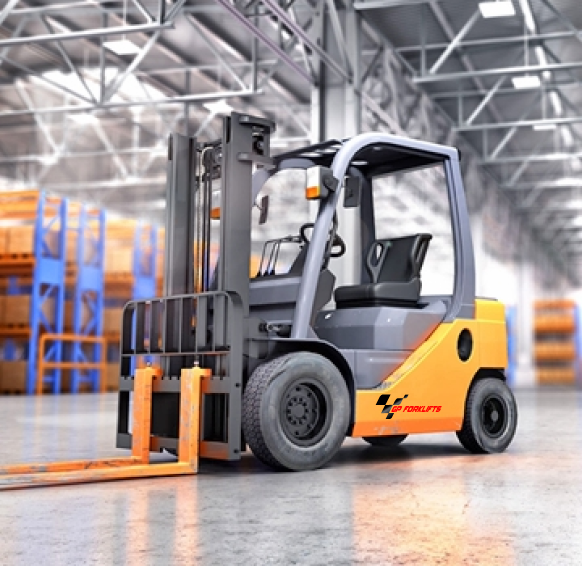
Tyres are the biggest single replacement cost over a forklift’s operational life. On a standard counterbalance forklift running double shifts in a Gauteng warehouse, a full tyre replacement for all four positions can run to R15,000 or more depending on specification. That cost lands whether your tyres lasted 18 months or 3 years: proper maintenance is the difference.
The good news is that most of the things that shorten forklift tyre life are preventable. This guide covers the daily inspection routine, the maintenance practices that genuinely extend service life, the operator habits that destroy tyres faster than anything else, and what to watch for in South Africa’s specific operating conditions.
Why forklift tyres wear faster than they should
The most common causes of premature tyre failure in South African operations, in rough order of frequency:
- Overloading: carrying loads above the forklift’s rated capacity puts the tyre under more compression stress than it was designed for. Even occasional overloading accelerates wear and heat build-up in the compound.
- Wrong tyre type for the surface: running solid tyres on rough outdoor surfaces, or under-specced budget tyres on 16-hour double shifts.
- Incorrect inflation on pneumatic tyres: underinflated pneumatics develop uneven wear, increased rolling resistance, and heat build-up that shortens the carcass life.
- Operator driving habits: sharp cornering under load, hard braking, spinning the drive tyres on acceleration, and cutting corners all cause disproportionate tyre wear.
- Floor contamination: oil spills, chemical exposure, and debris on the operating surface all accelerate rubber degradation.
- Leaving a loaded forklift stationary for extended periods: a solid tyre carrying a heavy load while stationary for hours develops flat spots at the contact point.
Daily tyre inspection: what to check and what to look for
A forklift operator’s pre-shift inspection should take about three minutes. That three minutes catches the problems that, if left, become expensive later in the week.
Walk the full circumference of each tyre and check:
- Contact surface condition: any flat spots, chunking, embedded debris, or obvious rubber damage.
- Sidewalls (pneumatic tyres): cuts, bulges, or visible cord through the rubber. Any of these require the tyre to come out of service before that shift.
- Base of solid tyres: check the join between the rubber and the rim for any signs of separation or lifting.
- Tyre height (solid tyres): any tyre that looks noticeably shorter than when last inspected should be flagged for a proper wear measurement.
- Pneumatic tyre pressure: visual inspection is not enough. Check inflation with a gauge. The correct pressure for your specific tyres is in the forklift’s operator manual.
Any defect found in the pre-shift check should be reported to the responsible person before the operator starts work. Not after the shift. The operator should not decide unilaterally whether a damaged tyre is safe to use for one more shift.
Managing pneumatic tyre pressure in South Africa’s climate
This section applies to pneumatic and solid pneumatic forklift tyres only. Solid tyres have no inflation pressure to manage.
Tyre pressure changes with temperature. In Johannesburg’s summer, where ambient temperatures can swing from 15 degrees overnight to 35 degrees or above by mid-afternoon, a pneumatic tyre that was correctly inflated in the morning will read higher pressure by the hottest part of the day. This is normal: do not release air from a warm tyre to bring the pressure back to the cold target.
The practical rule is to check tyre pressure when the tyre is cold, meaning before the first shift of the day or before any significant running, and to use the manufacturer’s cold inflation target. Most counterbalance forklift pneumatic tyres run between 100 and 120 PSI, but confirm against your specific machine’s documentation.
Monthly pressure checks are the minimum for any fleet. Weekly checks are a better standard for machines operating in mixed indoor and outdoor conditions, where temperature swings are more pronounced and the risk of slow leaks from debris is higher.
Protecting tyres from floor and surface damage
The floor your forklift operates on is as important as the tyre. Smooth, sealed concrete that is kept clean and free of debris is the best surface for solid tyre longevity. Several surface conditions accelerate tyre wear significantly.
Floor cracks and expansion joints cause the tyre to dip and flex at each crossing. On a heavily loaded forklift, repeated flexing at the same points of the solid tyre’s circumference concentrates stress and leads to cracking and chunking in those areas. If your facility has significant floor cracking, it’s worth budgeting for floor repairs alongside tyre replacements, because the saving on tyres over the following years will typically exceed the repair cost.
Oil and chemical spills on warehouse floors degrade rubber compounds. Petroleum-based fluids, cleaning chemicals, and battery acid are all harmful to standard rubber. If your operation involves regular spills of any of these, clean them up promptly and consider whether a chemical-resistant tyre compound is worth specifying for the affected areas.
Outdoor compacted gravel and rough surface debris are the enemies of solid tyre longevity. If your forklift needs to operate outdoors occasionally, even short stints on rough surfaces put disproportionate wear on solid tyres. A solid pneumatic or a genuine pneumatic tyre is the better choice for mixed-use machines.
Operator habits that are destroying your tyres
A skilled operator on a well-maintained forklift will consistently get better tyre life than a careless operator on the same machine. These are the habits to address through operator training.
Sharp cornering under load
Turning sharply with a raised or loaded mast causes the drive tyres to scrub laterally rather than roll cleanly. This is one of the fastest ways to create flat spots on solid tyres and to wear tread unevenly on pneumatics. Train operators to slow down before turning, lower the mast before moving, and complete turns in a wider arc.
Hard braking on loaded machines
Hard braking on a loaded forklift locks the drive tyres momentarily, creating a flat-spot-prone scrub. In warehouses with smooth sealed concrete, the marks left by hard braking are visible. If you’re seeing dark skid marks on your floor near racking, that’s where your tyre rubber is going.
Spinning the drive wheels on acceleration
Accelerating too quickly from a standing start with a load on causes the drive tyres to spin on the floor surface instead of gripping cleanly. Each spin event is a small amount of rubber being removed from the tyre. It’s the same principle as a car doing a wheel-spin takeaway: visible drama, invisible cost.
Leaving loaded forklifts stationary
A solid tyre under load develops a flat contact point at the floor after several hours of being stationary. In most cases, this resolves as the machine moves and the tyre warms up, but if the load is very heavy or the tyre was already towards the end of its service life, the flat spot can become permanent. Park forklifts with the mast lowered and, where possible, without heavy loads on the forks.
Tyre storage: what to do with spare tyres
Forklift tyres waiting for installation should be stored in a cool, dry environment away from direct sunlight. UV and ozone exposure degrades rubber compounds even in tyres that are not in service, and Johannesburg’s high UV index makes this a genuine concern for outdoor or partially covered storage areas.
Solid tyres should be stored lying flat or standing upright with support. Storing them in a way that allows the tyre to deform under its own weight for extended periods can cause permanent distortion.
Pneumatic tyres should be stored with some inflation pressure, around 10 PSI, to prevent the sidewall from collapsing inward. Completely deflated pneumatic tyres stored for long periods can develop internal creases in the casing that weaken the structure.
Forklift tyre inspection checklist
Use this checklist as part of the daily pre-shift inspection. It should take under 3 minutes.
Check item | Solid tyres | Pneumatic tyres |
Contact surface | Look for flat spots, chunking, cracking, embedded debris | Check tread depth, embedded nails/screws, tearing |
Sidewall | Check for deep cracking or rubber separation from rim | Check for cuts, bulges, cord exposure, age cracking |
Tyre height/tread | Compare to wear line. Flag if noticeably shorter than new | Check against wear indicator bars in tread grooves |
Inflation | Not applicable | Check with gauge before first shift of day |
Rim condition | Check for any signs of rubber lifting from rim | Check rim seal and valve stem condition |
Floor cleanliness | Note and report any chemical spills or debris on operating surface | Note and report debris likely to cause punctures |
Frequently asked questions
How often should forklift tyres be inspected in South Africa?
Pre-shift visual inspection is the minimum standard and should be done before every operating shift. A more detailed inspection, including measuring tread depth on pneumatics and assessing solid tyre compound condition, should be done monthly. Any time an operator reports unusual handling, vibration, or instability, an immediate tyre inspection should be carried out before the machine returns to service.
Do forklift tyres need to be rotated like car tyres?
Forklift tyre rotation is less common and less straightforward than car tyre rotation because the front drive tyres and rear steer tyres are usually different sizes. On machines where the same size tyre is used front and rear, rotation can help even out wear, but it’s not standard practice and should only be done if the rim specifications permit it. Most fleet managers replace tyres per axle pair rather than rotating.
Can I extend solid forklift tyre life by cutting a new profile?
Yes, for solid tyres that have lost their tread profile but still have adequate rubber above the wear line. A specialist can cut a new groove pattern into the remaining rubber with a tyre-cutting machine. This is a legitimate way to extend service life and is commonly done on premium compound tyres where significant rubber remains. It is not suitable for tyres that are at or near the wear line, chunked, or showing base cracking.
What floor conditions cause the most damage to solid forklift tyres in South Africa?
The most damaging floor conditions for solid tyres in South African operations are poorly sealed or cracked concrete, oil contamination, and the rough compacted surfaces found in some older Gauteng industrial properties. Chemical spills are also a concern in facilities that use cleaning chemicals or battery acid near the forklift operating area. Clean, smooth, sealed concrete is the ideal surface and extending the time between floor maintenance and repair directly impacts tyre replacement frequency.
Who can I contact in Johannesburg for forklift tyre maintenance or replacement?
GP Forklifts provides forklift tyre supply, fitting, and fleet inspection services across Johannesburg and Gauteng from our Edenvale facility. Call 010 110 1819 or email sales@gpforklifts.co.za to arrange a tyre assessment, order replacements, or discuss a maintenance schedule for your fleet.