You know that sinking feeling when you’re staring at the worn tyres on your forklift, trying to figure out what size you actually need? The sidewall’s so faded you can barely make out the numbers, and you’re not entirely sure if what was fitted originally is even correct. We see this situation all the time at GP Forklifts, and it’s more common than you’d think.
Getting the right tyres shouldn’t be this complicated, but somehow it is. Between different measuring systems, various tyre types, and conflicting information, you could spend half your day trying to sort it out. That’s time you don’t have when there’s a warehouse to run.
Here’s what actually matters: your forklift needs specific tyres, and fitting the wrong ones creates real problems. Not the “slightly inconvenient” kind—the “dangerous and expensive” kind. So let’s cut through the confusion and get you sorted.
What Those Numbers on Your Tyres Actually Mean
Right, so you’ve got a string of numbers on your tyre sidewall. Something like 6.00-9 or 7.00-12. What’s that actually telling you?
The first number is the width in inches. Second number? That’s your rim diameter. Simple enough until manufacturers decided metric would be fun too, so now you’ll also see things like 250-15, where 250mm is the width and 15 inches is the rim. Because consistency is apparently too much to ask.
Then there’s the industrial pneumatic format that looks like 28×9-15. First number is the overall diameter, second is width, third is rim size. Three different systems for the same information. Brilliant.
Your tyre will also have a ply rating stamped somewhere—usually shown as “8PR” or “12PR”. Higher numbers mean stronger construction. A 12-ply tyre can handle more punishment than an 8-ply, but it’ll cost you more and ride harder.
Some tyres show a load index number too. This tells you the maximum weight each tyre can carry. You’ll need to cross-reference it with a chart, which is another layer of faff, but it matters if you’re running your forklift near capacity.
The tricky bit? American forklifts use imperial measurements whilst European ones prefer metric. You need to know which system your machine speaks before ordering anything.
The Three Main Tyre Types (and Why It Matters)
Walk into any warehouse and you’ll see forklifts running three different tyre types. Each has its place, and choosing wrong means you’re either wasting money or creating problems.
Pneumatic tyres are filled with air, just like your bakkie. They cushion the ride and grip well on rough surfaces. If your forklift works outdoors or on dodgy ground, these are probably what you need. They come with inner tubes or as tubeless—tubeless being newer and generally less hassle when you get a puncture.
Solid pneumatics look the same but they’re solid rubber through and through. Can’t puncture them, which is brilliant if you’re working in scrap yards or anywhere with sharp debris lying about. The downside? They transfer every bump straight through to the operator and whatever you’re carrying. Your guys will feel it after an eight-hour shift.
Cushion tyres are smooth rubber discs that mount directly to the wheel. No air, no separate rim. They work beautifully on flat concrete but they’re useless on anything rough. Most electric forklifts that never leave the warehouse floor run cushion tyres because they’re smaller, which gives you a tighter turning circle.
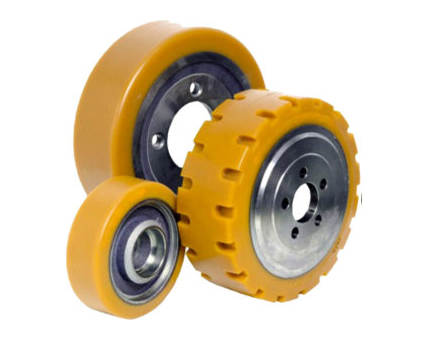
Then you’ve got polyurethane, which is the new kid. Lasts longer than rubber, doesn’t mark your floors, resists cuts better. More expensive upfront but cheaper over time if you’re running on pristine warehouse floors. Not suitable for outdoor work though.
Each type comes in its own range of sizes, and sometimes the same forklift can run different types depending what you’re doing with it. Worth chatting to us at GP Forklifts about what suits your actual working conditions rather than just ordering what was on there before.
Decoding the Sidewall Markings
Your existing tyres have everything written on them, assuming you can still read it. The size marking is usually the biggest text moulded into the rubber. Look for that first.
You’ll find the load index hiding near the size. It’s just a number, maybe 95 or 110, that corresponds to a weight rating. Never fit tyres with a lower load index than what’s specified for your forklift. The physical size might look identical, but if the load rating’s insufficient, you’re asking for trouble.
The ply rating tells you about construction strength. Your replacements should match or exceed the original ply rating. Going lower weakens your setup, even if someone tells you it’ll work fine.
Construction type shows as either a dash (like 7.00-15 for bias-ply) or an “R” (like 7.00R15 for radial). These aren’t interchangeable. Mixing them on the same forklift messes with handling, and you’ll get odd wear patterns.
Some tyres have directional arrows. If yours do, those arrows need to point forward when fitted. Installing them backwards reduces their effectiveness at channelling away water or debris, and they’ll wear faster.
The manufacturing date hides in a four-digit code. First two digits are the week, last two are the year. So 2319 means the 23rd week of 2019. Matters because rubber degrades over time whether you’re using it or not. Five to seven years is pushing it regardless of how much tread is left.
What Different Forklift Brands Actually Run
Toyota forklifts are everywhere in South Africa, and they’re fairly predictable with sizing. Small electric models often run 18×7-8 tyres. Their bigger diesel or LPG units typically want 7.00-12 or 28×9-15 pneumatics. Nothing too exotic.
Hyster and Yale share a lot of parts since they’re under the same ownership now. Mid-range models usually take 6.50-10 or 7.00-12. Heavy outdoor machines might need 8.25-15 or larger. Check your specific model though—there’s variation within their ranges.
Crown electrics commonly use cushion tyres in sizes like 16x6x10.5 or 18x7x12.125. They’re built for smooth floors, so those cushion tyres make sense.
Nissan forklifts love metric sizing. You’ll see 250-15 or 355/65-15 on their popular models. Linde’s the same—very European with their measurements. Common sizes include 200/50-10 and 250-15.
Capacity affects sizing more than brand, really. A 2,500kg forklift runs smaller tyres than a 5,000kg beast. Three-tonne machines might wear 6.00-9, whilst five-tonne units could need 7.50-15 or bigger.
Front and rear tyres aren’t always the same size either. Many forklifts run larger fronts to support the load, with smaller steering tyres at the back. A typical setup might be 6.50-10 fronts with 5.00-8 rears. Don’t assume all four corners match without checking.
We keep specifications for hundreds of models at GP Forklifts. Give us your model and serial number, and we’ll tell you exactly what you need. Saves you digging through old manuals or guessing.
Why Getting It Right Actually Matters
Fit the wrong size tyres and you’re not just making life inconvenient—you’re changing how your forklift behaves, and not in good ways.
Your machine’s stability depends on maintaining the centre of gravity that engineers designed in. That calculation assumed specific tyre dimensions. Go larger or smaller and you shift that balance, making the forklift more likely to tip when turning with a load or reaching high.
Tyres that are too wide rub on the frame or hydraulic lines. We’ve seen this destroy tyres and damage machines, sometimes causing hydraulic leaks that cost thousands to repair. Tyres too narrow for the rim can slip or even separate completely.
Load capacity drops with undersized tyres. Each tyre has a weight rating, and your forklift’s capacity assumes correct tyres. Smaller tyres or lower ply ratings can’t safely carry the same loads. The tyre might fail, or worse, the whole forklift becomes unstable.
Your operators notice handling differences immediately. Oversized tyres raise the machine, affecting clearance under racking. They change steering response and turning radius too. Undersized tyres lower everything, causing the chassis to scrape on loading ramps or uneven ground.
Tyre wear accelerates dramatically with wrong sizes. An undersized tyre spins faster to cover the same distance, generating heat and friction. You might get 2,000 hours from correct tyres but only 1,200 from ones that are slightly off.
Then there’s insurance. If there’s an accident and investigators find non-standard tyres without engineering approval, your claim could be denied. Most manufacturers also void warranties if you’ve modified specifications, including tyre sizes.
Measuring Tyres When the Markings Are Gone
Sometimes the sidewall’s completely worn smooth, or you’re dealing with a forklift that’s had who-knows-what fitted over the years. You’ll need to measure yourself.
Start with rim diameter because it’s the most reliable measurement. If you can remove the tyre, measure straight across the rim from edge to edge, not including the lip. That’s your third number. Can’t remove it? Measure between the inside edges where the tyre seats.
For width, measure the widest point of the tread surface with the tyre properly inflated. Not the sidewall bulge—just the bit that touches the ground. Record it in inches or millimetres depending what system your forklift uses.
Overall diameter requires the tyre mounted and inflated correctly. Measure from ground to the highest point, then double it. This accounts for the forklift’s weight compressing the tyre during normal use.
Compare your measurements to standard charts, but remember worn tyres measure smaller than new ones. A tyre measuring 5.75 inches wide might have started as a 6.00. The rim diameter stays constant though, so trust that measurement most.
Take photos of any markings, even faint ones. Sometimes these can be enhanced enough to read numbers that look gone to the naked eye. Send them to us at GP Forklifts along with your forklift details—we can often identify tyres from photos combined with make and model.
Load Ratings and Capacity
Every tyre has a maximum weight it can handle, shown as a load index number on the sidewall. Usually ranges from 80 to 130 for industrial applications, with each number corresponding to a specific weight in kilograms.
Your forklift’s weight plus maximum load gets split across all tyres, but not evenly. Front tyres carry most of the weight when lifting—sometimes 70% or more. That’s why many forklifts use higher-rated or larger tyres up front.
Here’s the maths: say your forklift weighs 4,000kg unladen and lifts 2,500kg maximum. Total weight is 6,500kg. If 70% lands on the front, that’s 4,550kg across two tyres, or 2,275kg each. You need tyres with a load index of at least 105 (rated for 2,275kg), but going higher gives you safety margin.
These ratings assume proper inflation. Underinflated pneumatic tyres can’t carry their rated load safely. They generate heat, flex excessively, and fail. Check pressures weekly with a decent gauge—don’t trust how they look. Pneumatic tyres can lose 20% pressure and still appear fine.
Ply rating connects to load capacity. Higher ply ratings generally mean more weight capacity in the same size. A 7.00-12 with 12PR supports more than the same size in 8PR. If you’re regularly at maximum load or working in tough conditions, the stronger tyre pays for itself.
Some operations try fitting larger tyres or higher ply ratings than specified to increase capacity. This needs engineering approval and might void your warranty and certification. We can assess whether that makes sense for your situation or if you’re better off getting a bigger forklift.
Making Tyres Last Longer
Maintenance determines whether your tyres last 2,000 hours or 4,000. Simple stuff that most people skip.
Check pneumatic tyre pressures when they’re cold, before starting work. Heat from operation increases pressure, giving you false readings if you check after running. Underinflation causes excessive flexing and heat buildup. Overinflation reduces the contact patch, wearing the centre of the tread faster.
Watch for uneven wear. Feathering across the tread means alignment issues. Excessive wear on one side points to bad turning habits or load distribution problems. Flat spots indicate harsh braking or dragging tyres through sharp turns. Fix the cause, not just the symptom.
Solid tyres don’t need pressure checks, but inspect them for cuts, gouges, and chunks missing. Pull out any metal debris or wire embedded in the rubber. Leaving it there lets water and contaminants penetrate deeper, accelerating damage. Check that solid tyres haven’t slipped on their wheels—the press fit can loosen.
Clean your tyres occasionally. Battery acid, certain chemicals, and even some floor cleaners attack rubber compounds. Wash them with water and mild soap to remove corrosive materials. You’ll also spot damage hidden under dirt.
Rotate tyres when possible to even out wear. Front tyres wear faster due to steering forces and load bearing. Swap them to the rear and move the less-worn rears forward. Not all forklifts allow this because of different front and rear sizes, but when you can, rotate every 500 to 800 hours.
Operator habits matter more than people think. Harsh acceleration tears rubber from the tread. Aggressive braking does the same. Taking corners too fast scrubs tyres sideways. Train your operators to accelerate smoothly, brake gradually, and take corners at sensible speeds. This alone can extend tyre life by 40%.
Knowing When to Replace
Don’t wait until you’re running on metal. Several clear signs tell you it’s time for new tyres.
Cushion tyres have it easy—when you see metal mounting plate, you’re done. Some have wear indicators moulded in that become visible at 50% wear. Don’t push it to metal showing through because that damages the wheel assembly.
Pneumatic tyres need replacing around 3mm tread depth. Less than that and you’ve got minimal grip plus high puncture risk. Look for wear bars in the tread grooves—when the tread surface becomes level with these bars, order replacements.
Solid pneumatic tyres are harder to judge. General rule says replacement at two-thirds original thickness worn away. Some manufacturers give specific measurements. Excessive cracking in the rubber, even with adequate tread, means the compound’s degraded and the tyre should go.
Any damage exposing structural components requires immediate replacement. Cuts deeper than 25% of tyre thickness, exposed cords or ply layers, bulges indicating internal separation, chunks missing from the tread—all of these mean new tyres now. Don’t try repairs on structural damage. The risk isn’t worth the cost savings.
Age matters even if wear looks acceptable. Rubber degrades from heat cycles, UV exposure, and chemical reactions in the compound. Most manufacturers recommend replacing tyres over five to seven years old regardless of appearance. Check that four-digit date code on the sidewall.
Operating on worn tyres costs more than replacing them. Stopping distances increase, stability decreases, accidents become more likely. Worn tyres also strain the transmission and differential because the machine works harder to maintain traction. You’re not saving money—you’re just deferring the cost and adding risk.
Getting the Right Tyres Without the Hassle
You shouldn’t need to become a tyre expert just to keep your forklift running. That’s why we’re here at GP Forklifts. We know the specifications for virtually every forklift operating in South Africa, and we stock common sizes for quick turnaround.
We supply all the major brands and types—pneumatic, solid, cushion, polyurethane, whatever you need. Whether you’re running one forklift or twenty, we’ll source what suits your application and budget. We’re not tied to a single manufacturer, so you get what’s actually best rather than whatever happens to be sitting in our warehouse.
We also fit tyres across Durban and the broader KwaZulu-Natal region. Our technicians handle the heavy work, mount everything correctly, set proper pressures, and check fitment. We’ll also look over your forklift’s general condition during tyre changes, catching problems before they cause breakdowns.
Fleet maintenance contracts take the guesswork out. We schedule regular inspections, track wear rates across your fleet, and plan replacements before tyres reach critical wear. This keeps things running smoothly and helps you budget accurately instead of dealing with emergency replacements.
Our forklift services cover everything beyond tyres too. We’ve built our reputation on straight talk and reliable service. When you ring us with a tyre question, you’ll speak with someone who understands both the technical side and the practical realities of keeping forklifts working in South African conditions.
Getting sorted is simple. Contact us with your forklift’s make, model, and serial number. We’ll confirm correct tyre sizes, check stock, and quote you. Most common sizes ship same day or next day, and we can fit at your site or ours. You don’t need to puzzle through sizing charts—that’s our job.
FAQs
Can I fit different size tyres on my forklift if they’re close to the original size?
No. Fit the exact size specified by the manufacturer. Even small variations affect stability, load capacity, and safety certification. Different sizes change the centre of gravity and cause handling problems or increase tip-over risk. If your operation needs different specifications, get engineering approval—you might need to reduce the forklift’s capacity rating.
How often should I check my forklift tyre pressure?
Check pneumatic tyres weekly at minimum, daily if you’re running heavy loads or tough conditions. Always check when tyres are cold, before starting work. Pressure increases as tyres heat up during operation, so checking hot tyres gives misleading high readings. Proper pressure extends tyre life and maintains safe handling.
What’s the difference between a 6-ply and 12-ply rated tyre?
Ply rating indicates strength and load-carrying ability. A 12-ply tyre has stronger construction and supports more weight than a 6-ply tyre in the same size. Higher ply ratings suit heavier loads, rougher terrain, and demanding applications. Stronger tyres cost more and ride harder though. Your forklift specifications show the minimum ply rating required—you can go higher but not lower.
How long do forklift tyres typically last?
Varies enormously. Cushion tyres in clean warehouses might last 2,500 to 4,000 hours. Pneumatic tyres used outdoors typically last 2,000 to 3,000 hours. Solid tyres can reach 5,000 hours or more in suitable applications. Poor maintenance, aggressive driving, and harsh environments cut these figures in half. Careful operation and proper maintenance extend life significantly.
Can I mix different tyre brands or types on the same forklift?
You can mix brands as long as sizes, load ratings, and construction types match on each axle. Never mix different tyre types though—pneumatic with solid, or cushion with pneumatic—on the same machine. Don’t mix radial and bias-ply either. Both tyres on the front axle should match exactly, as should both on the rear. Mismatched tyres cause uneven wear and handling problems that compromise safety.